
Real Lessons From The Market
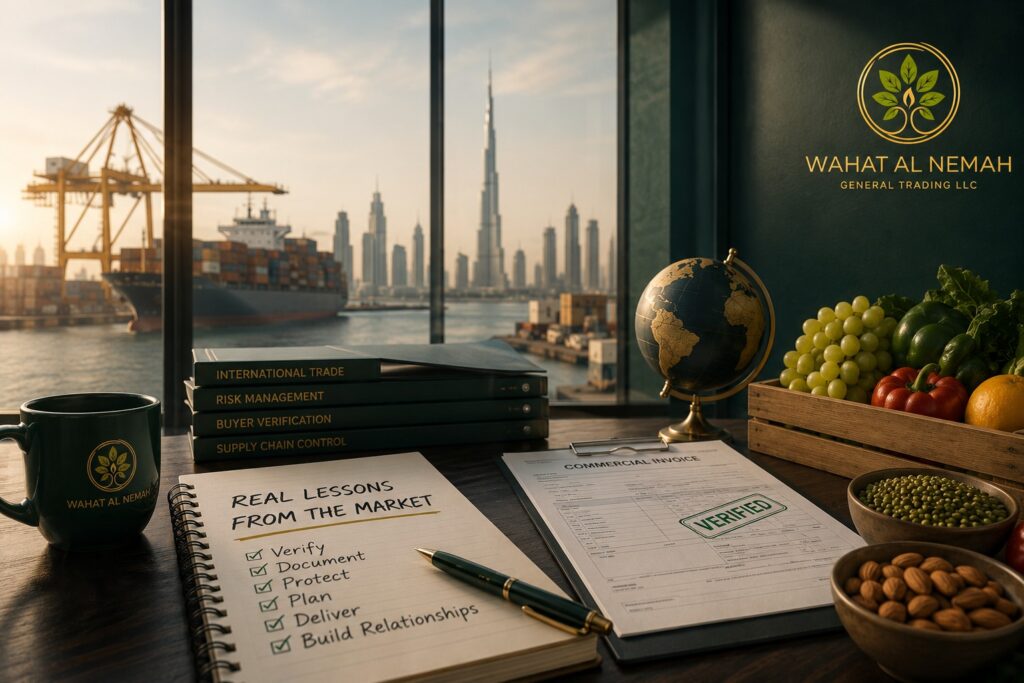
What International Trade Quietly Teaches Exporters Over Time
There is a version of international trade that looks glamorous from the outside.
Container photographs.
Global meetings.
International travel.
Large purchase orders.
New markets.
Foreign buyers.
Rapid scaling stories.
And then there is the real side of trade — the side exporters only understand after spending years inside the market.
The missed payments.
The delayed containers.
The sudden silence after dispatch.
The documentation pressure.
The quality disputes.
The logistics surprises.
The difficult conversations no one posts about publicly.
Real trade teaches quietly.
Usually through experience.
Sometimes through loss.
And often through conversations with exporters who have already walked through difficult situations.
Markets Do Not Reward Excitement Alone
One thing global trade teaches very quickly:
Excitement is not a business strategy.
Many exporters enter international markets with strong products and genuine intentions, but without enough operational discipline around:
- buyer verification
- payment protection
- documentation
- logistics control
- market intelligence
- shipment exposure
- trade structuring
In the early stages, large inquiries can feel validating.
A buyer from overseas shows interest.
Container discussions begin.
Volumes increase on paper.
Margins look attractive.
But experienced exporters learn to slow down before saying yes.
Because in exports, problems become significantly harder to solve once cargo moves internationally.
The Market Tests Discipline Constantly
Real export businesses are not built only on sourcing or pricing.
They are built on consistency in small decisions made every day.
The market watches:
- how carefully you verify buyers
- how clearly you document agreements
- how you handle claims
- how you respond during delays
- whether quality remains stable under pressure
- whether you protect both reputation and relationships
Many businesses fail not because products are weak, but because systems are weak.
And international trade exposes weak systems very quickly.
Trust Is Important. Verification Is More Important.
One of the most dangerous assumptions in exports is believing that visibility equals credibility.
A company may have:
- a website
- a trade license
- a polished profile
- social media activity
- online verification badges
- professional communication
And still not operate with long-term business ethics.
This does not mean exporters should become fearful or suspicious of every opportunity.
It simply means trust should always be supported by verification.
Professional exporters quietly cross-check:
- office existence
- import history
- supplier references
- logistics behaviour
- payment discipline
- banking patterns
- market reputation
before increasing shipment exposure.
The most experienced traders are often the calmest people in the room — not because risk disappears, but because systems become stronger.
Dubai, GCC Markets & Trade Reality
Over the years, Dubai has evolved into one of the world’s most efficient re-export and trade ecosystems.
Fresh produce, agro commodities, FMCG products, machinery, metals, textiles, and consumer goods move through the region at remarkable speed.
For exporters from India, the GCC remains a highly strategic market because of:
- geographic proximity
- strong logistics connectivity
- deep trading networks
- multicultural business environment
- re-export opportunities into Africa and the Middle East
But speed in trade also increases the importance of due diligence.
Markets like Dubai operate on relationships, reputation, execution speed, and trust built over time.
And serious buyers value suppliers who think long term.
Containers Teach Patience
One lesson almost every exporter eventually learns:
A shipment is never “finished” when cargo leaves the warehouse.
Real trade management continues through:
- customs movement
- vessel tracking
- document control
- destination coordination
- buyer communication
- claims handling
- payment follow-up
Every container teaches something.
Sometimes about markets.
Sometimes about people.
Sometimes about your own systems.
And often, the biggest lessons come from shipments that did not go perfectly.
Growth Without Systems Becomes Dangerous
As exporters scale, operational gaps become more expensive.
What works at:
- 1 container
may fail at: - 20 containers
Growth requires:
- process discipline
- documentation discipline
- logistics visibility
- supplier reliability
- financial control
- risk diversification
Experienced exporters know that sustainable trade growth is usually slower and quieter than social media makes it appear.
But it lasts longer.
Real Exporters Never Stop Learning
One of the most valuable aspects of international trade is the exchange of real experiences between traders, exporters, buyers, freight operators, and market participants.
Not every lesson comes from success.
Some come from:
- delayed payments
- rejected cargo
- weak partners
- rushed decisions
- incorrect assumptions
- overconfidence
But over time, these experiences build sharper judgement.
And sharper judgement becomes one of the most valuable assets in global trade.
Final Thought
International trade remains one of the most powerful ways to build businesses across borders.
It creates opportunities that local markets sometimes cannot.
But global trade rewards discipline far more than excitement.
The exporters who survive long term are usually not the loudest.
They are the ones who:
- verify carefully
- document properly
- protect relationships
- stay operationally alert
- keep learning from the market
Because real lessons from the market are rarely theoretical.
They are lived.
And the businesses that learn early usually grow stronger over time.
About Wahat Al Nemah General Trading LLC
Wahat Al Nemah General Trading LLC is a Dubai-based international trading company focused on fresh produce, agro commodities, sourcing, GCC trade operations, and regional re-export ecosystems. The company works closely with suppliers, buyers, logistics operators, and regional trade networks with a strong focus on disciplined execution, reliable partnerships, and long-term trade relationships.
Contact: +971 557850489
Email: Info@wahatalnemah.com