
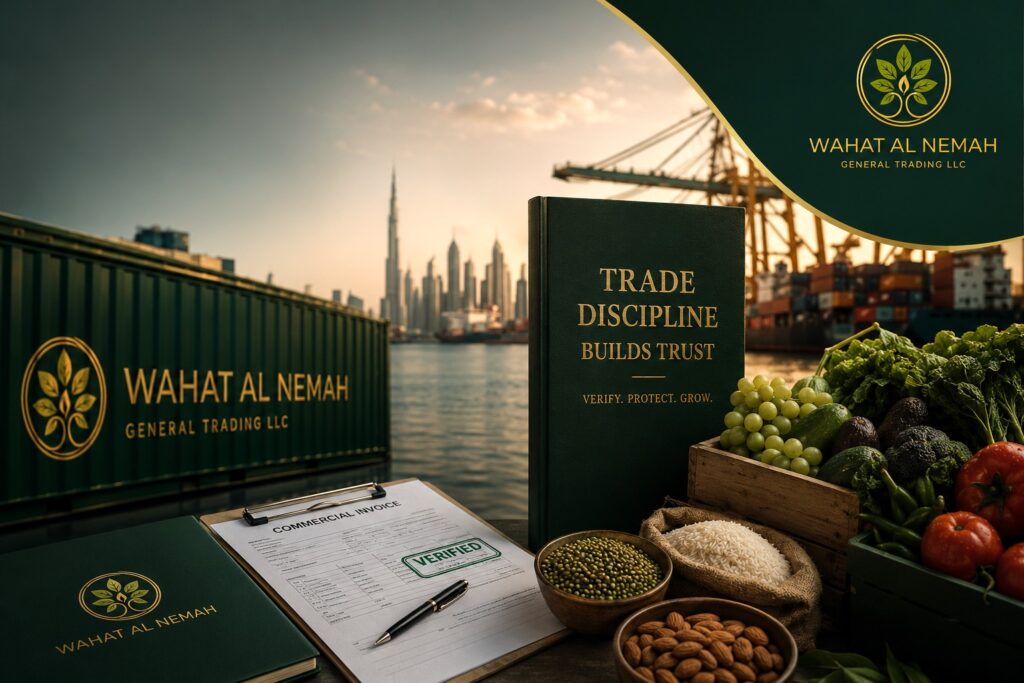
Trade Failures Exporters Must Avoid
The Cost of Blind Trust in International Trade
In international trade, losses rarely happen overnight.
Most export failures begin quietly — with assumptions, unchecked credibility, rushed decisions, or overconfidence created by a seemingly attractive opportunity.
Recently, during a conversation with exporter Mahesh Shetye, what began as a normal business discussion slowly turned into an important reminder for every exporter working across global markets.
He shared how nearly ₹37 lakhs were reportedly lost in a Dubai trade transaction involving a company called DMM Vision. What made the situation more concerning was that the company had apparently been introduced through a known B2B platform and initially appeared “verified”.
Later, it reportedly emerged that multiple exporters from different parts of India had faced similar issues around the same period.
The known exposure discussed was close to ₹1.9 crore.
But beyond the numbers, the larger issue was this:
Even after written instructions were reportedly given to hold the Bill of Lading and not release the Delivery Order, the exporter still suffered losses. By the time reality surfaced, the financial damage had already been done.
And unfortunately, this is where entire markets often get blamed unfairly.
Dubai Is Not the Problem
Dubai remains one of the most important global trade gateways in the world.
From fresh produce and agro commodities to electronics, metals, FMCG products, and re-export operations, the city operates as a high-speed commercial bridge connecting Asia, Africa, Europe, and the GCC region.
Thousands of ethical and highly professional businesses operate successfully from Dubai every single day.
But like every major trading hub globally, it also attracts opportunists who understand how to create urgency, artificial credibility, and emotional comfort.
This is not unique to Dubai.
The same risks exist in every major trade ecosystem:
- Southeast Asia
- Africa
- Europe
- China
- Latin America
- Even domestic trade markets
The real issue is not geography.
The real issue is weak trade discipline.
Why Exporters Become Vulnerable
Many first-generation exporters enter global trade with strong product knowledge but limited risk management experience.
And international trade can be unforgiving when excitement overtakes process.
A few common patterns appear repeatedly in failed export transactions:
1. Over-Reliance on B2B Platforms
Online platforms can help generate leads.
But a “verified” badge should never replace independent due diligence.
Verification often confirms only limited documentation submitted to a portal — not necessarily the financial strength, reputation, ethics, or trade history of the buyer.
2. Emotional Attachment to Large Orders
One of the biggest traps in exports is volume-driven excitement.
A large inquiry from overseas can quickly create urgency:
- Bigger turnover
- Faster scaling
- International visibility
- Container movement
- Market expansion
But experienced exporters know this:
A safe small order is always better than a risky large order.
Trade grows sustainably through repeat business, not one aggressive shipment.
3. Weak Documentation Control
Many exporters underestimate the importance of precise written communication.
In international disputes, verbal assurances carry little value.
Clear documentation regarding:
- Payment terms
- BL handling
- Delivery instructions
- Inspection conditions
- Quality parameters
- Arbitration clauses
- Buyer responsibilities
can significantly influence legal and commercial outcomes later.
4. Lack of Independent Market Verification
A buyer may have:
- A trade license
- A website
- Social media presence
- Business cards
- A warehouse address
And still not be commercially trustworthy.
Professional exporters verify:
- Actual office operations
- Banking relationships
- Existing suppliers
- Imports history
- Market reputation
- Payment behaviour
- Container movement patterns
before increasing exposure.
The Reality of Global Trade
International trade is beautiful.
It creates livelihoods, builds industries, connects countries, and allows businesses to grow beyond borders.
But it is also operationally intense.
Once cargo moves internationally:
- Legal recovery becomes slower
- Jurisdiction becomes complex
- Logistics costs continue accumulating
- Communication weakens
- Insurance complications arise
- Documentation gaps become expensive
And in many cases, exporters realise problems only after the shipment reaches destination markets.
This is why experienced traders often focus more on risk control than on aggressive sales growth.
Practical Safeguards Every Exporter Should Build
There is no system that guarantees zero risk.
But disciplined exporters reduce exposure significantly through process.
Some practical safeguards include:
Verify Beyond the Internet
Do not rely only on portals, websites, or digital badges.
Cross-check independently through:
- Trade circles
- Freight forwarders
- Market references
- Existing suppliers
- Chamber networks
- Import databases where accessible
Visit Markets Personally
Physical market visits reveal realities that online meetings never can.
A few days spent in destination markets often save years of future losses.
Start Small
Initial trial shipments help establish:
- Payment behaviour
- Communication quality
- Documentation discipline
- Claims handling
- Operational reliability
before scaling volumes.
Protect Payment Exposure
Depending on transaction size and trust level, exporters should evaluate:
- Advance payments
- LC structures
- Credit insurance
- Controlled BL release
- Escrow structures where practical
No payment structure is perfect, but unmanaged exposure is dangerous.
Maintain Strong Logistics Control
Exporters must remain closely connected with:
- Freight forwarders
- Shipping lines
- CHA teams
- Destination clearing status
- Documentation movement
Operational visibility matters.
Fear Should Not Stop Trade
Stories like these can create fear among new exporters.
But fear is not the answer.
Trade has always involved uncertainty.
Every experienced exporter has faced:
- Delayed payments
- Quality disputes
- Shipment losses
- Currency fluctuations
- Documentation challenges
- Market slowdowns
- Buyer failures
The goal is not to avoid risk completely.
The goal is to take calculated risks with stronger systems.
Travel.
Meet buyers.
Study markets.
Build globally.
But verify carefully before containers move.
Final Thought
Some of the best trade education never comes from seminars or presentations.
It comes from honest conversations between exporters who have seen both growth and losses firsthand.
Global trade rewards patience, discipline, verification, and long-term relationships.
And sometimes, the most expensive lessons are the ones that remind us to slow down and double-check before saying yes.
About Wahat Al Nemah General Trading LLC
Wahat Al Nemah General Trading LLC is a Dubai-based international trading company focused on fresh produce, agro commodities, sourcing, GCC trade operations, and regional re-export ecosystems across the Middle East and Africa. The company works closely with suppliers, buyers, logistics partners, and market operators across international trade corridors with a strong focus on operational reliability, trade discipline, and long-term business relationships.
Contact: Sales: +971 557850489
Send Email:
Sales: Info@wahatalnemah.com
Visit a Office:
Food District Central, Fruits and Vegetables Market, Ras Al Khor, Dubai, UAE.