
The Reality Behind One Of GCC Trade’s Most Common Business Models
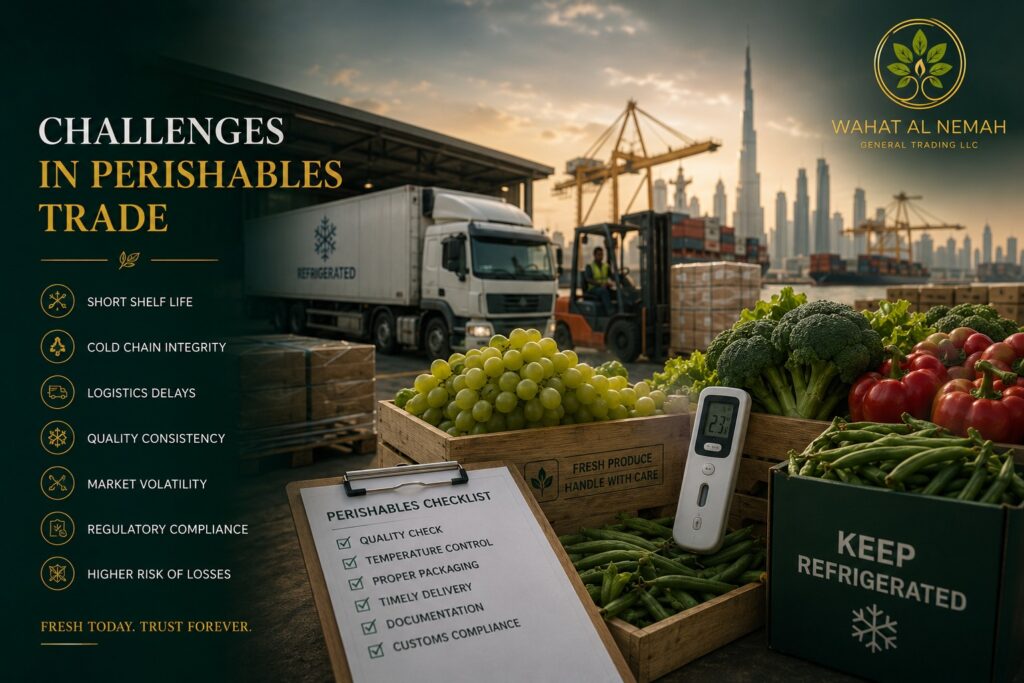
For many exporters entering the GCC market for the first time, Dubai often appears straightforward from the outside.
A buyer shows interest.
A distributor promises market access.
A commission agent offers connections.
A wholesaler speaks confidently about volumes.
And very quickly, exporters begin hearing one common phrase:
“Send cargo on commission basis.”
For newcomers, this can sound attractive.
No immediate market setup.
No local office investment.
Quick market entry.
Fast access to wholesale channels.
But experienced exporters understand something important:
Commission and consignment trade can either build long-term GCC business relationships — or create serious financial and operational exposure if handled carelessly.
The difference usually lies in structure, documentation, and market understanding.
Understanding Commission & Consignment Trade
In simple terms:
Commission Basis
A local market operator sells cargo on behalf of the exporter and earns a pre-agreed commission percentage.
Consignment Basis
Cargo is shipped without a fully fixed sale at dispatch stage, and final sales/payment depend on actual market movement after arrival.
This model is common in:
- fresh produce
- perishables
- agro commodities
- wholesale fruits & vegetables
- flowers
- seafood
- certain FMCG categories
especially in high-volume wholesale ecosystems like Dubai.
Why Dubai Operates Heavily On Relationship-Based Trade
Dubai is not only an import market.
It is:
- a redistribution hub
- a re-export center
- a regional pricing ecosystem
- a fast-moving wholesale trade environment
Markets such as:
- Al Aweer
- Dubai Fruit & Vegetable Market
- regional GCC wholesale networks
operate at high speed.
Prices fluctuate daily based on:
- arrivals volume
- quality
- origin country
- shelf life
- market demand
- weather
- religious seasons
- competitor supply
Because of this volatility, many transactions happen through trusted commission agents and long-standing trade relationships.
And this system works very efficiently — when trust and discipline already exist.
The Biggest Misunderstanding New Exporters Make
Many first-time exporters assume:
“The consignee is responsible for selling my cargo at the best possible price.”
But the market does not operate emotionally.
Commission agents typically work under intense market pressure themselves:
- fluctuating arrivals
- buyer bargaining
- spoilage risk
- cold storage pressure
- payment collections
- local competition
If exporters do not structure relationships properly, disputes often arise around:
- actual selling prices
- market deductions
- wastage claims
- quality complaints
- delayed remittances
- hidden commissions
- clearance costs
- payment timelines
And once cargo is sold in the market, recovering leverage becomes difficult.
Why Perishables Increase Risk
In perishables trade, time weakens bargaining power.
Fresh produce cannot wait indefinitely inside:
- reefer containers
- cold storage
- wholesale yards
- distribution channels
This creates urgency.
And urgency often shifts negotiating power toward whoever controls local market movement.
Especially in products like:
- onions
- bananas
- grapes
- pomegranates
- green chillies
- coconuts
- vegetables
market value can change dramatically within 24–72 hours.
This is why experienced exporters focus heavily on:
- consignee credibility
- market transparency
- payment discipline
- destination visibility
before increasing volumes.
Commission Percentages: The Market Reality
One common mistake exporters make is expecting unrealistically low commission structures.
In practical GCC wholesale trade, commission levels often reflect:
- market risk
- handling effort
- unloading coordination
- labour
- collections
- local relationships
- spoilage exposure
- market volatility
Trying to aggressively negotiate extremely low commissions sometimes creates unintended consequences:
- weak market attention
- poor cargo handling
- hidden deductions later
- compromised transparency
- strained relationships
Professional exporters therefore focus not only on commission percentage — but on reliability and reporting discipline.
Sometimes a trustworthy operator charging slightly higher commission creates significantly safer long-term business.
Documentation Becomes Extremely Important
In commission and consignment trade, verbal understanding is dangerous.
Clear written agreements should ideally define:
- commission percentage
- payment cycle
- unloading responsibility
- market expense structure
- spoilage handling
- unsold cargo process
- reporting frequency
- deduction transparency
- dispute handling process
Without operational clarity, misunderstandings become common very quickly.
The Importance Of Market Visibility
Experienced exporters rarely remain disconnected after cargo arrival.
They monitor:
- unloading status
- market arrivals
- prevailing rates
- stock movement
- competitor pricing
- buyer feedback
- local market sentiment
Many successful exporters eventually travel personally to GCC markets regularly because physical visibility changes understanding completely.
A few days spent inside wholesale markets often teaches more than months of remote communication.
Trust Is Built Slowly In GCC Trade
One reality many exporters discover over time:
GCC trade is deeply relationship-driven.
Long-term business is rarely built through one profitable shipment.
It is built through:
- consistency
- honesty
- communication
- problem-solving
- operational discipline
- mutual respect
And reputation travels very quickly within wholesale trade circles.
Reliable exporters become known.
Reliable commission agents become known.
And equally, problematic operators also become known over time.
Not Every Consignment Model Is Bad
There is an important misconception that all consignment trade is unsafe.
That is not true.
Some of the strongest long-term perishables businesses globally operate through relationship-based market systems.
But successful exporters usually:
- start carefully
- scale gradually
- monitor aggressively
- diversify buyers
- protect documentation
- maintain market visibility
- avoid emotional decision-making
Trade failures usually happen when excitement grows faster than systems.
Dubai Remains One Of The World’s Best Trade Gateways
Despite risks, Dubai continues to remain one of the most important global trade ecosystems for:
- India
- GCC markets
- Africa
- Central Asia
- re-export trade corridors
Its infrastructure, logistics connectivity, multicultural business environment, and regional access remain unmatched in many ways.
But like every major trading ecosystem globally, success depends on understanding how the market actually operates — not how it appears from social media or surface-level conversations.
Final Thought
Commission and consignment trade are not inherently dangerous.
But they require maturity.
The exporters who survive long term in GCC markets are usually the ones who:
- verify carefully
- build slowly
- stay operationally involved
- protect relationships
- understand market psychology
- focus on systems over excitement
Because in perishables and wholesale trade, cargo alone does not build business.
Trust does.
And trust in international trade is built shipment by shipment over time.
About Wahat Al Nemah General Trading LLC
Wahat Al Nemah General Trading LLC is a Dubai-based international trading company focused on fresh produce, agro commodities, sourcing, GCC trade operations, and regional re-export ecosystems across the Middle East and Africa. The company works closely with growers, exporters, wholesale buyers, logistics operators, and regional trade partners with a strong focus on disciplined execution, transparent trade practices, and long-term business relationships.
Phone:+971 557850489
Email:Info@wahatalnemah.com